I want to sleep longer, so I’m testing no coffee after 12:00 on myself.I want better recovery, so I’m testing a walk after dinner on myself.I want a lower morning blood sugar, so I’m testing a low-carb dinner on myself.I want more deep sleep, so I’m testing magnesium before bed on myself.I want less back pain, so I’m testing a daily core workout on myself.
01 / 05
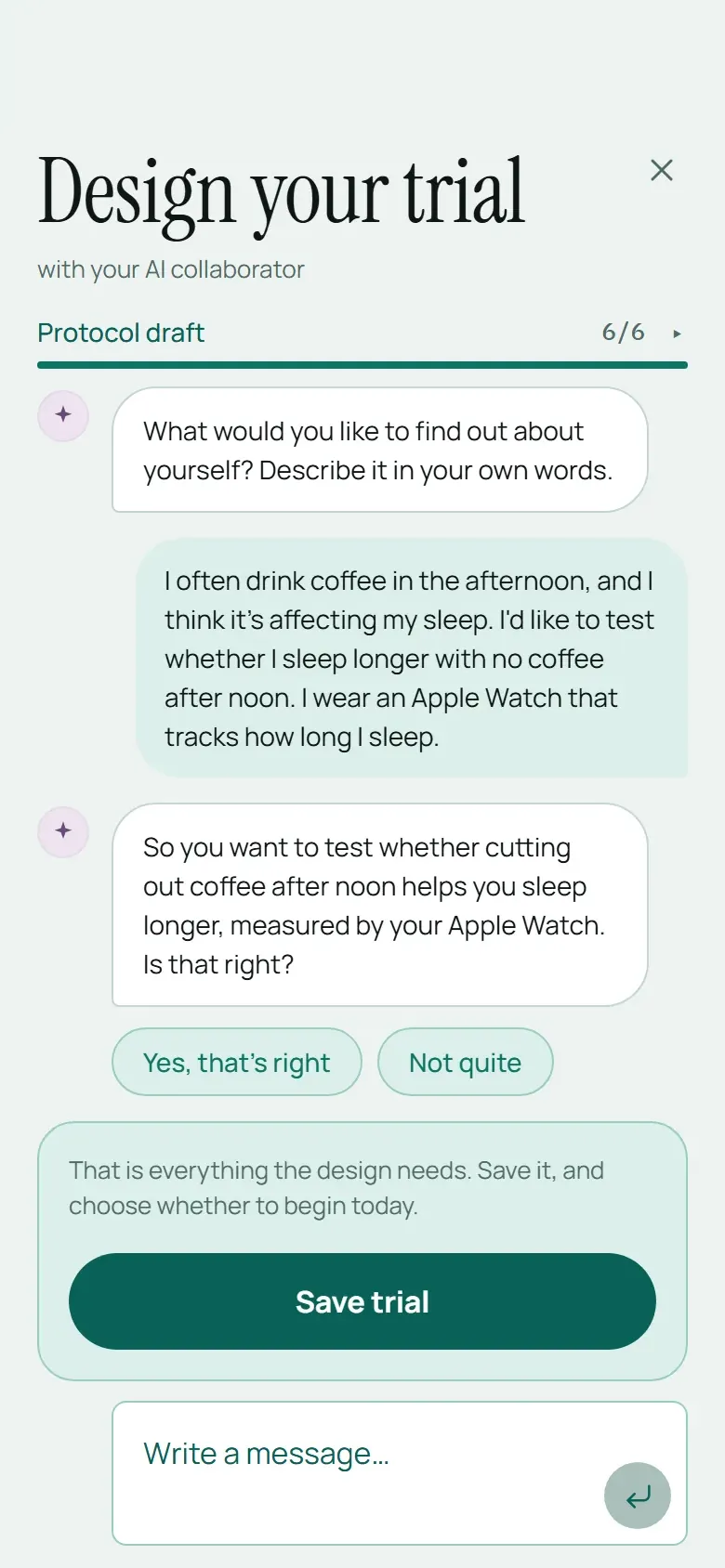
You stop drinking coffee after noon, and that week you sleep better. Was it the coffee? Maybe. Or maybe work was quieter, the evenings were cooler, or it was simply a good week. One week can’t tell you which. With the N1 Trial app you can test it scientifically: you plan it in a few minutes with an AI collaborator, the app measures every day for a few weeks, and at the end you get a well-founded estimate of how much difference the change made for you.
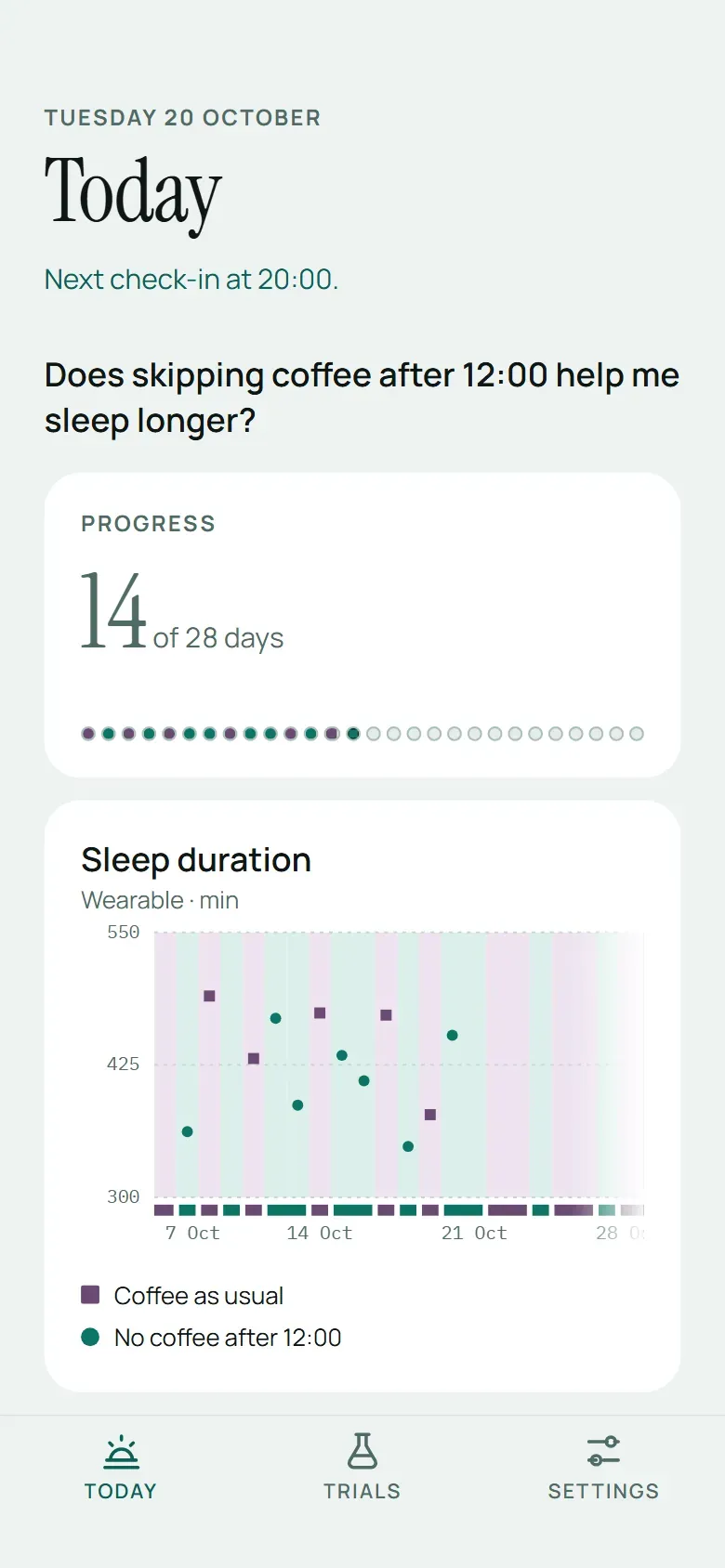
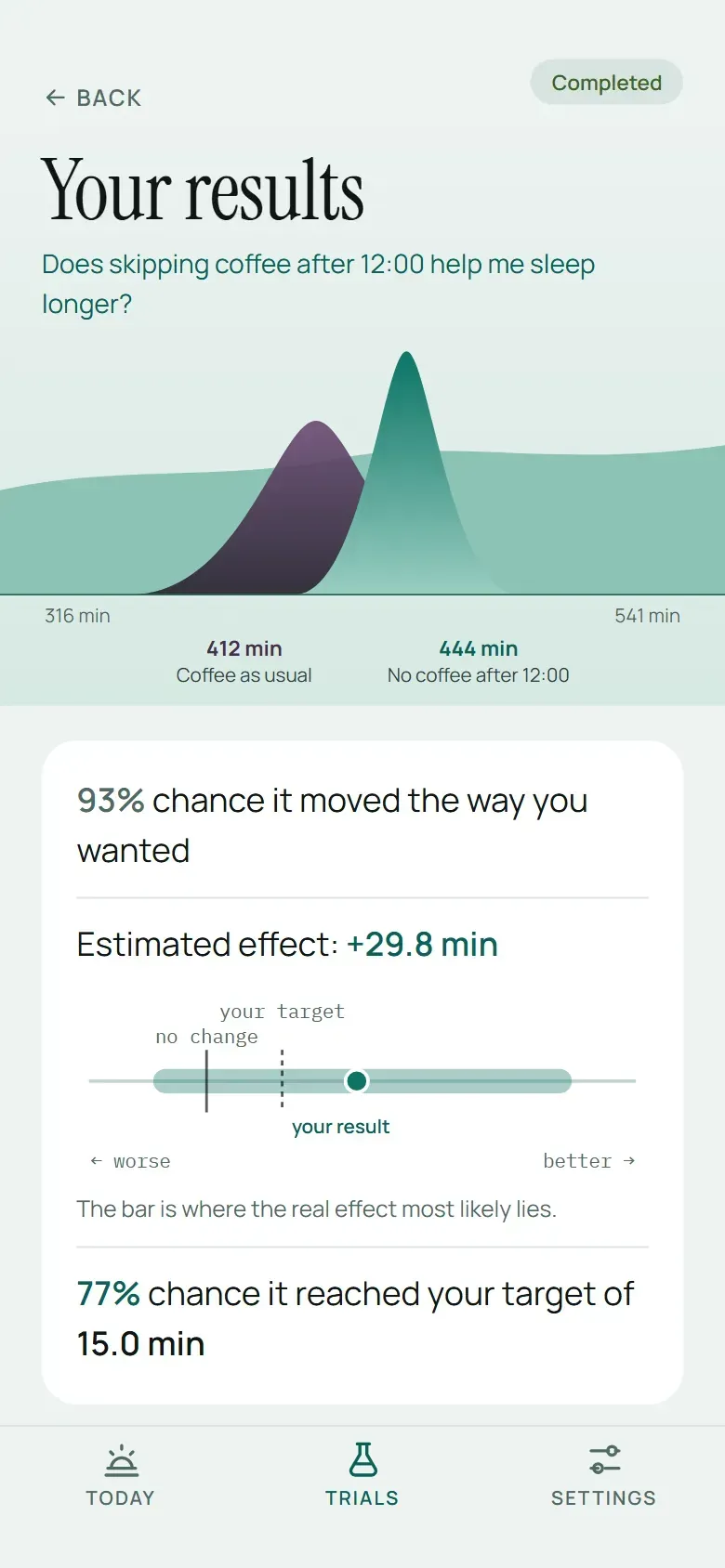
Does skipping coffee after 12:00 help me sleep longer?
Sleep duration each night, from your smartwatch
The plan
28 days · 28 blocks
With the change
Usual routine
Result
Probably helped
93% chance it helped you sleep longer
Estimated effect: +30 min of sleep a night
77% chance it reached your target of +15 min
Does a walk after dinner help me recover better overnight?
Heart-rate variability (HRV) each night, from your Whoop
The plan
21 days · 21 blocks
With the change
Usual routine
Result
Can't tell yet
70% chance the walk improved your recovery
Estimated effect: +2 ms HRV a night
21% chance it reached your target of +5 ms
Does a low-carb dinner lower my fasting blood sugar the next morning?
Fasting blood sugar each morning, from a finger-prick test
The plan
21 days · 21 blocks
With the change
Usual routine
Result
Clear improvement
99% chance the change lowered your morning blood sugar
Estimated effect: −0.8 mmol/L each morning
87% chance it reached your target of −0.5 mmol/L
Does 300 mg of magnesium before bed give me more deep sleep that night?
Time in deep sleep each night, from your Oura ring
The plan
28 days · 7 blocks
With the change
Usual routine
Set aside
Result
No meaningful difference
50% chance magnesium gave you more deep sleep
Estimated effect: +1 min of deep sleep a night
6% chance it reached your target of +15 min
Does a daily 15-minute core workout ease my back pain?
Back pain from 0 to 10, rated each evening in the app
The plan
42 days · 6 blocks
With the change
Usual routine
Set aside
Result
Clear improvement
99% chance the workout eased your back pain
Estimated effect: −1.7 points a day
85% chance it reached your target of −1 point
Why a trial: Correlation is not causation
Tracking your health data is not enough.
Health trackers and apps are good at measuring, and some can show that two things moved together: you started taking magnesium, and your deep sleep went up. But life rarely holds still. In the same weeks you may also have gone to bed earlier, cut back on coffee or trained more, and any of those could be the real reason. Most apps stop at the pattern; N1 Trial tests it. An N-of-1 trial is the scientific way to single out one change and find out what it does for you.
Random order
Testing whether an evening walk helps you sleep? If you pick the evenings, you’ll probably walk when you have time and feel calm, and that helps you sleep too.
Evenings with a walk
calm12
busy2
So the app draws lots for the evenings, and you end up walking on busy and calm evenings alike. If there’s still a difference, it’s most likely the walk that made it.
Compared with yourself
Studies tell you what works on average, but people respond differently.
one person in a study
Here you’re compared with yourself, on days with and without the change, so the answer is about you, not an average.
Honest about uncertainty
You get an estimate of the difference and of how sure it is.
most likely effect
the effect could be anywhere in this range
If it’s small, or too early to tell, we say so, which may save you sticking with a habit that makes little difference for you.
Tell your AI collaborator what you want to find out, and what counts as success. It suggests what to try and for how long. Or start from one of the ready-made trials in our catalogue.
2
Run it for a few weeks
Switch between days with and without the change. The app tracks how it’s going with data from your wearable, or from a quick daily check-in.
3
See what the data says
At the end, we compare your days with and without the change and let you know how likely it is that it made a difference for you.
0:00 / 0:00
Good to know
What it’s for, and what it isn’t.
Everyday habits
Sleep, movement, caffeine, routines, small changes to your day. The kind of question you would otherwise settle with a guess.
Not medical advice
N1 Trial isn’t a medical device. The AI collaborator is built not to tell you to start, stop or change a prescription medication or a treatment you’re already on. Talk to your doctor about those.
Your data stays in the EU
Your trials, your health data and the AI conversation are stored and processed in the EU. We don’t sell data or share it with advertisers.
N1trials ApS is based in Aarhus, Denmark. We’re building N1 Trial so that anyone can answer everyday questions about their own life with a proper method, and an honest account of what the data can and can’t say.
The people behind it
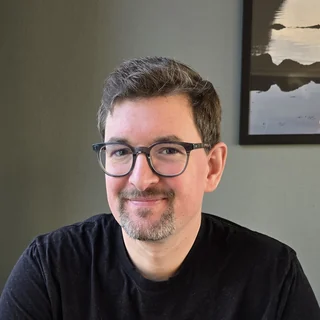
Bjarke Grouleff
Co-founder · Product and technology
Computer scientist from Aarhus University with 15 years of building software, including as co-founder and CTO of WorkTango, sold to Vista Equity Partners in 2022. N1 Trial is the third company he has co-founded, and he makes sure it is secure, private and easy to use. His own open question: do his morning exercises help his back?
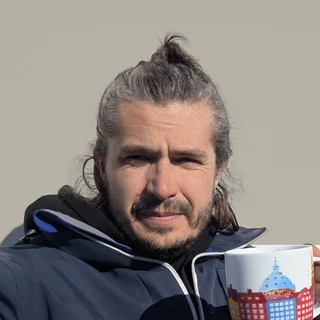
PhD in Economics from the University of Copenhagen and a World Bank consultant. His research covers data integration and causal inference at the individual level. At N1 Trial, he focuses on methods, trial designs, and result interpretation. His own open question: does running, breathwork, or sauna affect his heart rate variability?
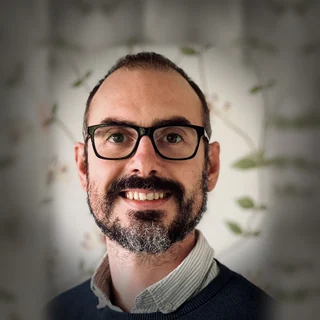
Medical doctor with a PhD in pharmacoepidemiology, the study of how medicines work in real patients. Founder and CEO of Donor Network, board member of Novatech and an active investor. He advises N1 Trial on how trials are designed. His own open question: does meditating ten minutes three times a day sharpen his mind?